

Which Seafood Dinner Fits Tonight?
What should you order when catfish, salmon, shrimp, and seafood platters all sound good?
That's the real hesitation at the table. Nobody standing over a Denison menu after a long afternoon is asking for a taxonomy of fish. They're deciding whether tonight feels like a crispy basket you eat with your hands, a richer plate you sit up straight for, or a shared spread that keeps everyone at the table happy.
This is a practical comparison, built for the people who actually order it: folks coming off Lake Texoma, families rolling in from Eisenhower State Park, road-trippers who want one good dinner before the drive home. Between late afternoon and early evening, mixed appetites need a choice that works for the whole car, not a fine-dining lecture.
Four filters do most of the deciding: flavor intensity, texture, cooking method, and occasion. Get those four lined up and the menu stops arguing with you.
The Quick Comparison: Catfish vs. Salmon vs. Mixed Seafood
Most people scan a menu the same way. Flavor first. Then texture. Then how it's cooked. Then whether the plate fits the group they came in with. The table below follows that order so you can rule out the wrong choices fast.
Quick Seafood Dinner Comparison
| Seafood choice | Flavor | Texture | Best cooking styles | Best occasion |
|---|---|---|---|---|
| Catfish | Mild and slightly sweet | Tender and flaky | Fried or blackened | Comfort, post-lake appetite |
| Salmon | Richer and fuller | Dense and firm | Grilled, baked, blackened, glazed | Composed dinner, date night |
| Shrimp | Sweet and clean | Springy, firm bite | Fried, grilled, boiled, sauced | Sharing, easy dipping |
| Oysters | Briny, flavor-forward | Tender, soft | Fried, broiled, raw where available | Adventurous palates |
| Mixed platter | Variety-driven | Mixed across the plate | Combination of methods | Groups, split appetites |
This guide is for restaurant-style ordering. It isn't medical nutrition advice, commercial seafood grading, sustainability scoring, or a fishing-regulation cheat sheet. It's about what lands well on your plate tonight.
Catfish Dinners: Mild, Crispy, and Built for Comfort
Catfish is the comfort baseline for a reason. It answers the most common dinner problem for road-trip eaters: you want something hot, crisp, familiar, and filling without the heavier mouthfeel of a richer fish sitting in your stomach for the next couple of hours.
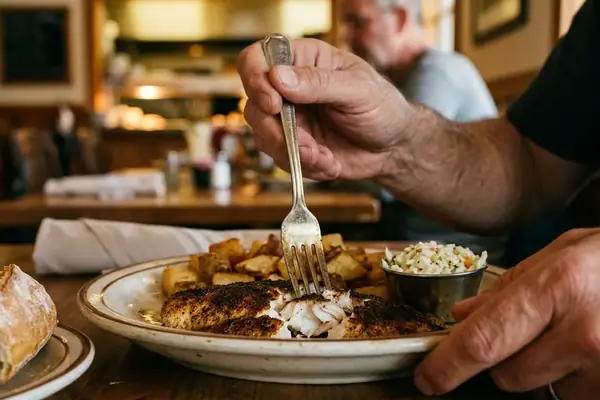
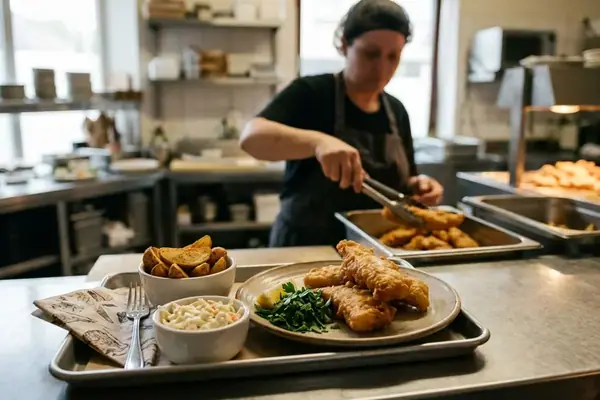
The classic fried catfish dinner has a shape to it. Fillets, hush puppies, fries or slaw, tartar sauce, lemon, and a bottle of hot sauce somewhere near your elbow. The cornmeal crust does the heavy lifting here — it gives the fish a coarse, crackly shell that's the whole point of a Southern-style basket.
Calling catfish bland misses what people are actually ordering. The value isn't the fillet alone. It's the mild flake plus that cornmeal crust, plus hot sauce, plus lemon, plus hush puppies and slaw all working together as one plate.
Want a step up without leaping into salmon's richness? Order it blackened. You get spice, char, and that paprika-forward seasoning while keeping the tender flake catfish is known for. After lake time, dock walking, or a park visit, a catfish dinner reads as a full meal, not just a protein with a couple of sides.
Salmon Dinners: Richer Flavor, Firmer Bite, Cleaner Plate
Salmon shifts the whole expectation. You're still ordering seafood, but the meal stops being basket-and-dip and starts being a plate built around one richer centerpiece.
Its defining traits: fuller flavor, firmer texture, a naturally richer mouthfeel than catfish or shrimp. That density is why salmon holds up to bolder preparation.
- Grilled for smoke and char.
- Baked for a gentler, softer texture.
- Blackened for spice and a dark crust.
- Glazed for a sweeter finish.
Salmon usually pairs better with vegetables, rice, potatoes, a salad, lemon butter, or a composed sauce than with a hush-puppy-and-fries basket. It wants a plate, not a paper tray.
Here's the trap, though. Salmon isn't automatically the lighter choice. A heavily glazed fillet, drowned in butter sauce and set next to rich sides, can eat heavier than a plain fried catfish basket. Judge the whole plate, not just the fish. When someone wants seafood but doesn't want the meal to revolve around a fully fried basket, that's the salmon cue.
Expert Tip: The FoodSafety.gov safe minimum internal temperature for fish and shellfish is 145°F. If you like salmon on the softer side, that's the number worth knowing before you send it back for another minute.
Shrimp, Oysters, and Platters: When Variety Beats One Main Fish
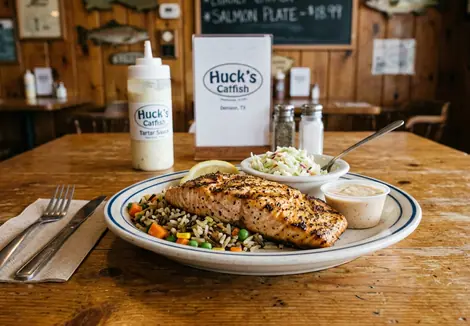
Shrimp, oysters, and platters solve a different problem. They're the answer to social ordering, not a straight swap for catfish or salmon. The decision is less about one perfect main fish and more about dipping, sharing, and piece count.
Shrimp is the approachable pick: sweet, firm, easy to share because each piece can be dipped on its own in cocktail sauce, remoulade, lemon butter, or hot sauce. Its personality changes with the method, too. Grilled with lemon, shrimp feels light and clean. Fried and served with fries, hush puppies, and remoulade, that same shrimp becomes a full comfort-food order.
Oysters ask a little more of the diner. They're briny and assertive, most so when raw or lightly cooked where the menu offers it. Fried or broiled oysters soften that punch and make the flavor easier for cautious eaters to enjoy.
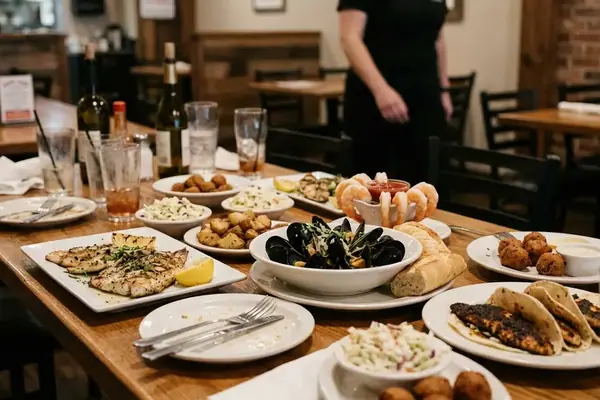
A mixed platter is the sampler. Fish, shrimp, oysters, sides, lemon, and a lineup of sauces — it feels festive because of the sheer variety and piece count. The tradeoff is focus: a platter gives you more to try but less of any one thing done perfectly, the way a single catfish dinner or a well-cooked salmon entrée delivers.
Caution: Raw or undercooked shellfish isn't right for every diner. If you're at all unsure, order the fully cooked preparations — fried or broiled oysters, boiled shrimp, and enjoy the flavor without the worry.
Fried, Grilled, Blackened, or Boiled: The Method Changes Everything
The same seafood lands completely differently depending on how it's cooked. Fried catfish and blackened catfish solve two different cravings, and they're the same fish. That's why method deserves to come before species when you're stuck.
- Fried: crunch, comfort, dipping sauces. Strongest match for catfish, shrimp, oysters, and combo baskets.
- Grilled: smoke, char, a cleaner finish. Strongest for salmon and shrimp, and good for catfish when it's on offer.
- Blackened: a spice crust, paprika-forward and dark. Works on catfish, salmon, and shrimp alike.
- Boiled or steamed: shellfish-forward, casual, seasoning spread across the whole plate for easy sharing.
Main Point: If two menu items sound equally good, choose the cooking method first, then choose the seafood. It settles more ties than picking the fish ever will.
Sides and Sauces Decide the Dinner More Than You Think
The seafood starts the order. The sides and sauces decide whether you end up with a road-trip basket, a lighter dinner, a family share, or a date-night plate.
Fries and hush puppies push everything toward casual comfort. Slaw adds crunch and acidity. Vegetables, rice, or a salad make the same fish feel noticeably lighter. You're steering the meal with the sides, whether you meant to or not.
Sauces do the same job. Tartar for fried catfish. Cocktail sauce for shrimp. Lemon butter for salmon or anything grilled. Hot sauce for fried baskets. Remoulade when you want something bolder to dip into.
Don't skip the acid. Lemon, slaw, pickles, and vinegar-based sauces cut straight through a fried crust or a richer fish, and they're what keeps a heavy plate from wearing you out halfway through.
Occasion maps neatly onto all of it. A road-trip lunch leans catfish or shrimp baskets. Family dinner wants a mixed platter. A post-lake appetite calls for fried catfish. Date night points to salmon or grilled seafood. Kids almost always do better with mild, dippable pieces.
Main Point: The most satisfying plate matches seafood, cooking method, side, and sauce together — not the fish alone.
How to Order With Confidence: Three Real Dinner Scenarios
Here are three situations you'll probably recognize.
The hungry road-tripper
You want comfort and crunch and you want it now. Fried catfish, slaw, hush puppies, lemon, and either tartar or hot sauce. That's the plate that makes the whole drive worth it.
Seafood without the heavy basket
You're craving fish but not a fried tray. Grilled or blackened salmon with vegetables, rice, or a salad. Richer flavor, firmer bite, cleaner plate.
The group that can't agree
Everybody wants something different. A mixed platter with shrimp, catfish, and oysters if they've got them, plus extra lemon and a spread of sauces. More variety, more to pass around.
The shorthand is simple: catfish for comfort, salmon for richness and structure, shrimp or platters for sharing and variety.
Picture the tail end of a Saturday. A family pulls out of Eisenhower State Park as the light goes gold, drives the few minutes into Denison with everyone a little sunburned and starving. One of them orders fried catfish — crunch, hush puppies, hot sauce, the works. Across the table, someone else asks for grilled salmon with rice and a lemon wedge, wanting something cleaner after a day outdoors. Two orders, same table, both exactly right. Nobody had to win the argument.

Responses
Nothing here yet. Add your opinion.
Join the Discussion