
What Should You Order When Catfish Is Your Safe Choice?
Here's the question that stalls a lot of good dinners: what seafood should you order when you always, without fail, get the catfish?
You know the drill. The menu arrives, everyone else is debating shrimp versus salmon, and you already know you'll land on fried catfish because it never lets you down. Mild flavor. Soft, fork-tender flake. A cornmeal crust when it's fried. Hush puppies and slaw riding shotgun. There's almost no risk in that order, which is exactly why it's hard to break away from.
But you're curious. Maybe you're at a lake-town spot near Eisenhower State Park, or a roadside stop on a North Texas drive, and the seafood side of the menu keeps catching your eye. This guide is a practical ordering method for that exact moment — the two-to-five minutes after the menu hits the table and you have to decide.
One boundary up front, stated plainly: this is about taste and ordering confidence. It is not medical advice, allergy safety, religious dietary guidance, or a prescribed nutrition plan. If you have a shellfish or fish allergy, a pregnancy-related restriction, or clinician-directed limits, menu similarity is not a safety shortcut. Keep those decisions where they belong.
Break Your Catfish Order Into Three Clues
Most catfish regulars aren't loyal to a single species. They're loyal to a combination: fork-tender texture, mild flavor, and a comforting fried-or-seasoned plate. Figure out which of those three you actually care about, and the next choice gets a lot easier.
Clue one: texture
Catfish cuts easily with a fork. You never have to saw through dense, steak-like flesh. If that soft, flaky bite is what you love, that's your north star.
Clue two: flavor
The catfish target is mild and slightly sweet. Not oily, not aggressively briny, not mineral-tasting. If you've ever pushed away a piece of fish because it tasted "too fishy," flavor is probably your main lever.
Clue three: preparation
Cornmeal crunch, deep-fried saltiness, blackened spice, plain grilled simplicity, sauce-heavy comfort — these are all different reasons a plate feels safe. Be honest about which one you're chasing.
Main Point: If you know whether you love the crunch, the mildness, or the whole plate, your next seafood choice gets much easier.
If Texture Matters Most, Stay Close to Flaky White Fish
Sort your options by mouthfeel, not by some ranking of which seafood is "better." Start soft and flaky, then move firmer only when you're ready for a bigger change.
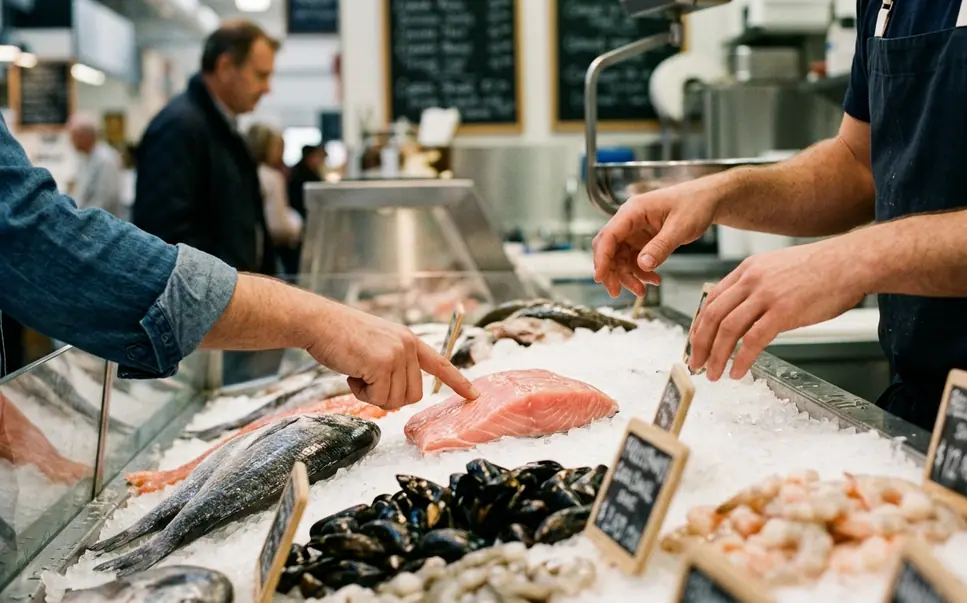
Closest to catfish: cod, tilapia, haddock, trout, or another mild white fish, whenever the restaurant has one on the menu. These read as flaky fillets and behave like catfish under your fork.
A moderate step up: mahi-mahi or snapper, especially grilled or blackened. Both usually feel firmer than catfish, but they still read as a fish fillet rather than a shellfish bite. You're changing the texture a little, not leaping.
The boldest jump: shrimp for that springy snap, scallops for a richer tender bite, salmon for a firmer, oilier forkful. Nothing wrong with these — just know they're a bigger change from what you're used to.
One thing worth knowing before you commit: "white fish" is a menu category, not a single fish. Depending on the night, the kitchen might be serving cod, tilapia, haddock, pollock, or a rotating catch. The texture can shift with it, which is why the questions later in this guide matter.
Use a Mild-to-Bold Flavor Ladder
For most catfish fans, flavor intensity is the real reason they hesitate. The fear isn't texture — it's biting into something that tastes like the ocean threw up on the plate. So climb a ladder instead of jumping.
- Mild rung: white fish, grilled shrimp, fried shrimp, and crab cakes — as long as the menu description isn't leaning hard on chile, mustard, horseradish, or heavy seafood stock.
- Medium rung: blackened fish, trout, mahi-mahi, shrimp with garlic butter, or shrimp with remoulade served on the side.
- Bold rung: salmon, oysters, mussels, strongly briny shellfish, and heavily seasoned seafood boils.
This ladder is built for regular menus, lake-town dinners, highway stops, road-trip plates. Not tasting menus where the kitchen controls the sequence for you. Start one rung above your comfort zone, not three.
Let the Cooking Method Be Your Comfort Dial
The same seafood can feel completely familiar or totally foreign depending on how it's cooked. Method is your dial. Turn it slowly.
Fried is the closest bridge for a fried-catfish regular. Crunch, salt, lemon, tartar sauce, and hand-cut-looking sides make shrimp or white fish feel familiar before you've even judged the species. It carries all your usual cues.
Blackened keeps the plate hearty and casual while adding a visible spice crust and a stronger aroma than plain grilled fish. It's the natural step for anyone spice-curious.
Grilled feels cleaner and lighter. But it strips away the crust — and if you're being honest, that crust might be the whole reason you order catfish. That's a real trap: a diner who mainly loves the cornmeal crunch orders grilled white fish because it's mild, then leaves disappointed because the missing crunch mattered more than the fish.
Broiled or steamed puts you closest to the seafood itself. Less breading, less char, more sweetness and marine flavor coming straight through. Save that for when you're genuinely curious about the fish, not the plate around it.
Expert Tip: When trying a new seafood, keep either the cooking method or the sides familiar. You do not have to change the whole plate at once.
Check the Freshness Cues Before You Commit
You can't inspect the walk-in cooler or check the delivery date, and you shouldn't try. Stick to what a guest can actually notice at the table.
Trust your nose and eyes first: a clean smell, bright appearance, moist-looking flesh, no sour or ammonia-like odor. Hot items should arrive hot, not lukewarm. Those are the signals available to you.
Fried seafood is where people get fooled, because a crisp crust can hide a dry interior. Break the crust and look. The fish inside should flake easily and look moist, not cottony or gray-dry. Shrimp should feel firm with a clean bite — not rubbery, mushy, or sharply iodine-like.
For anyone wanting the baseline cues on selecting and handling seafood, the FDA seafood freshness and safety guidance covers smell, appearance, and handling in plain terms.
And when you ask the server, keep it practical. "What fish is moving well tonight?" tells you far more than asking anyone to guarantee freshness in some broad, absolute way. Where a busy kitchen's turnover shows up on the plate, the fast-selling fish tends to be the one worth ordering.
Build a Familiar Plate Around the New Seafood
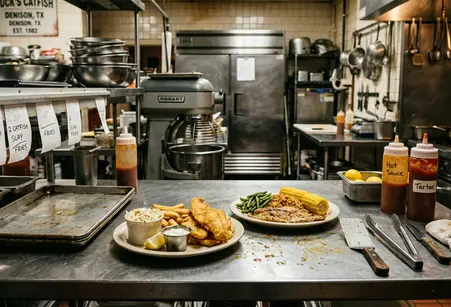
Change one thing, keep the rest. The seafood can be new while the sides, sauce, citrus, and drink stay squarely in catfish-dinner territory.
Your familiar anchors are the usual suspects: hush puppies, coleslaw, fries, beans, pickles, lemon wedges, tartar sauce, cocktail sauce, and iced tea. Load the plate with a few of those and a new protein suddenly feels a lot less risky.
For a first-time order, ask for sauce on the side. Take two honest bites of the seafood before you cover it — you want to know what the fish actually tastes like, not what the remoulade tastes like.
A few pairings that hold the comfort zone:
- Grilled shrimp with slaw and fries: casual plate, new protein texture.
- Blackened white fish with rice and lemon: spice and brightness, no heavy seafood-boil flavor.
- Fried shrimp with hush puppies and tartar sauce: the full fried-catfish rhythm of crunch, dip, side, and sip.
Ask Two Questions Before You Order
You don't need to interrogate the kitchen. Two short questions cover texture, flavor, and execution in just about twenty seconds.
- "Which fish is mildest and closest to catfish tonight?"
- "Would you recommend it fried, grilled, or blackened?"
Ask before the server walks away with your entree order — not after you've already committed. Treat the answers as preference guidance, and let allergies, budget, appetite, and portion size make the final call.
The One Order I'd Put in Front of a Nervous Diner
Here are three paths that work. The fried-catfish loyalist gets fried shrimp or fried white fish with hush puppies and slaw. The mild-flavor diner gets grilled white fish or grilled shrimp with lemon and a familiar side. The spice-curious diner gets blackened white fish with sauce on the side.
If a table has mixed comfort levels, let the cautious person take fried shrimp or mild white fish while the adventurous one orders blackened, then trade a single bite — only if you both actually want to.
But if you're standing at the counter and you want one move, order the blackened white fish with catfish-style sides whenever it's on the menu. It changes the flavor enough to feel like you tried something, keeps the flaky texture you already love, and leaves the comfort-plate structure of your usual order almost untouched. That's the order that gets a lifelong catfish regular to look up from the fryer section and actually enjoy the switch.






Responses
Nothing here yet. Add your opinion.
Join the Discussion