What Makes a Road-Trip Restaurant Feel Truly Local?
“How can you tell, before you park, whether a Texas roadside restaurant is truly local?”
Approaching a town edge from the driver's seat presents a familiar visual clutter. Gas station signs tower over the highway, chain logos cluster around the exits, and a courthouse square option might sit a few miles down a farm-to-market road. Finding a meal that actually reflects the region is a practical decision, not a culinary purity test. You are looking for local ownership, regional cooking habits, neighborhood regulars, and food that fits the place.
A useful road-trip filter relies on three quick checks that take give or take five to eight minutes before you commit to a stop. You evaluate local context, menu evidence, and real-world behavior. In places like Denison, along Lake Texoma, or down Grayson County highways, abstract authenticity matters less than local routine. You want to see weekday lunch traffic, families gathering after Sunday service, anglers coming off the lake, and workers eating before an afternoon shift.
Do the Five-Minute Scan Before You Leave the Highway
The research step should feel like something a passenger can do while the driver is still on the main route — a quick filtering process rather than a long search. According to local expertise, a five-minute scan breaks down easily: spend nearly two minutes on map results, another two minutes checking recent menus or photos, and just about one minute confirming hours and route fit.
Search terms need to tie directly to actual meals. Combine the town name with specific foods like catfish, barbecue, plate lunch, taqueria, chicken-fried steak, seafood, bakery, or breakfast. Broad phrases like “best restaurants” often pull up generic statewide roundup pages. Instead, check local chambers, park-adjacent visitor pages, town event calendars, and recent map listings.
Consider a traveler leaving Eisenhower State Park or the Lake Texoma area. The best move is to look beyond the first highway-side cluster of fuel, fast food, and motel signs before turning south toward Denison.
Expert Tip: The Texas Department of Transportation travel information centers are useful for highway context, rest stops, maps, and travel conditions, not for deciding which restaurant has the best catfish.
Read the Parking Lot, Windows, and Door Before the Menu
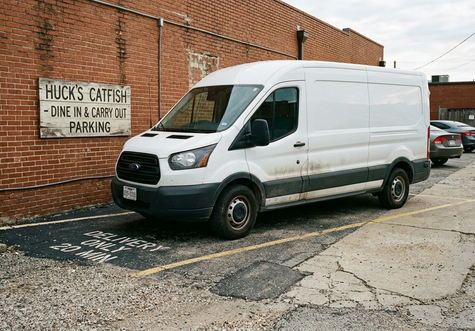
Observation begins before you enter the building. Pause long enough to read whether the surrounding community actually uses the space. The strongest lunch-window cues appear from roughly 11:15 a.m. to 1:30 p.m. on weekdays, when work trucks, local sedans, and utility vehicles fill the lot.
Context dictates what these clues mean. Near Lake Texoma, a parking lot with boat trailers, fishing rods visible in truck beds, coolers, park stickers, and mixed plates from nearby counties serves as a strong local-use clue. On a downtown courthouse square, lunch workers and regular counter customers matter more. Sunday-family cues usually appear after late-morning church services and before mid-afternoon closing times, explaining a sudden rush even when the exterior looks plain.
Operating hours reveal a business built around local routines. Breakfast-only service ending before early afternoon, weekday lunch counters, Friday fish specials, and dinner service that closes earlier than tourist expectations all point to a neighborhood focus.
Decor remains weak evidence by itself. A rustic-looking building with Texas flags, reclaimed wood, neon beer signs, cowboy art, and “home cooking” language can still be a weak stop if the menu is unfocused, the dining room is empty at the local meal hour, and recent reviews do not mention specific dishes.
Use the Menu to Separate Local Cooking from Roadside Theater
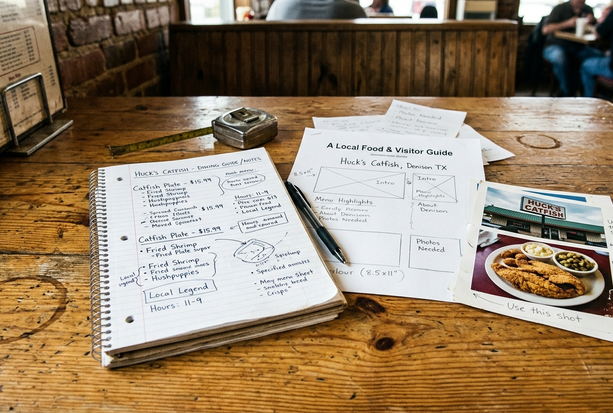
You are not judging culinary purity; you are checking whether the kitchen knows what it does best. A smaller menu with a believable center of gravity carries more weight than a giant menu trying to satisfy every passing traveler.
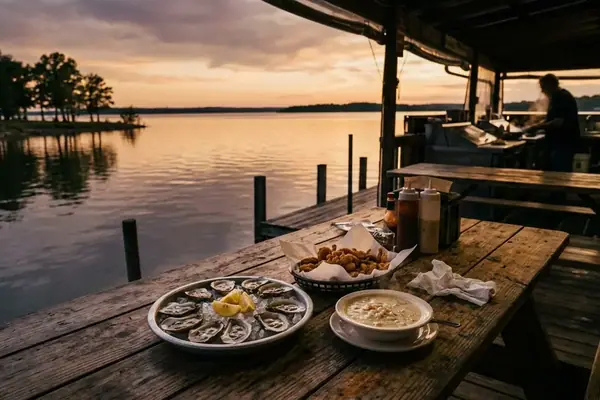
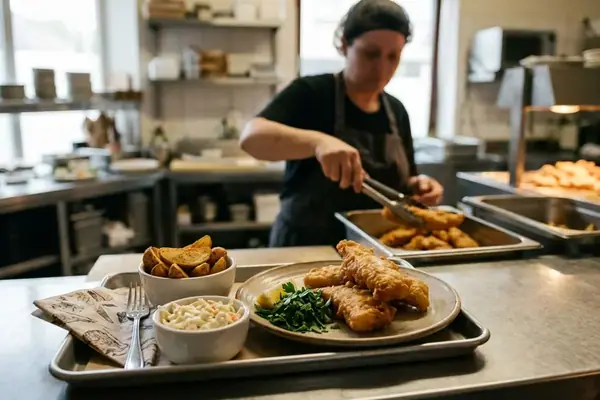
Regional menu signals for North Texas road trips include fried catfish, hushpuppies, coleslaw, pinto beans, barbecue plates, chicken-fried steak, breakfast tacos, cobbler, and seafood plates that fit the kitchen’s setup. A believable catfish or seafood stop does not need dozens of fish options. A focused basket, plate, family order, or special acts as stronger evidence than a long, generic seafood list.
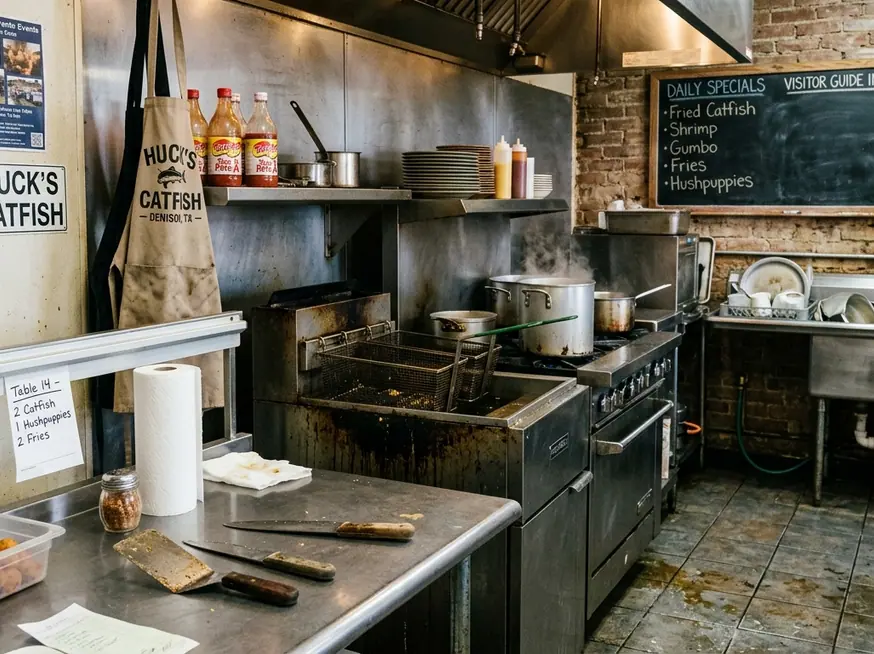
Look for signs of kitchen confidence. Daily specials written near the counter, a short side list, house tartar or hot sauce, a local cobbler or pie rotation, and staff who can answer “What do regulars order?” without checking a script all indicate a capable cooking team.
Main Point: If the menu tells you where you are, who eats there, and what the kitchen does best, you are probably closer to a real local stop.
Read Reviews Like a Local, Not Like a Star Chaser
Treat reviews as field notes, not as a scoreboard. A high star rating can mislead travelers if most praise is old, vague, or based on convenience rather than food details. Sort reviews by most recent first and give extra weight to comments from the past 30 to 90 days. This matters deeply for small restaurants where hours, staffing, or ownership can change quickly.
Repeated mentions of a single dish carry more weight than generic praise. Search inside reviews for useful repeated phrases: “lunch special,” “regulars,” “church crowd,” “lake,” “boat,” “courthouse,” “shift workers,” “homemade,” “crispy,” “fresh,” and the name of a specific dish.
Interpret mixed reviews carefully. A complaint about waiting 20 to 30 minutes during a Friday dinner rush may simply mean the kitchen was busy, not bad. Treat criticism from travelers expecting chain-style speed carefully when the same review admits the dining room was full or the counter had a line. Conversely, repeated mentions of cold food, dirty tables, or confused orders demand attention. Treat “best ever” as weak unless it names a dish, texture, side, sauce, or service detail.
Know the Red Flags Before You Commit to the Stop
Avoid overreacting to harmless quirks. Paper plates, counter service, older carpet, mismatched chairs, handwritten signs, self-serve tea, and a building that looks more practical than polished are normal for excellent local restaurants. You want to base your decision on clusters of evidence rather than a single oddity.
True warning signs require a change of plans. Watch out for no clear posted hours, menu photos older than several months with no recent confirmation, inconsistent prices across photos, a huge unfocused menu, an empty dining room during a normal meal period, or staff unable to describe signature dishes. Unclear hours plus old menu photos plus no recent dish mentions is a strong signal to keep driving.
Caution: Tourist-corridor risk is highest near major exits where convenience can hide weak menu identity; the restaurant should still pass the place, plate, and people checks.
Road-trip reality often involves the next-town problem. If the next plausible stop is in the range of 25 to 35 miles away, your goal is informed judgment, not perfection.
Use the Three-Ring Test When You Have Two Choices
Travelers rarely have time for a full investigation. From watching visitor routing habits, a simple decision tool works best: choose the restaurant that passes at least two of three rings. The three rings are place, plate, and people.
- Place: The restaurant fits the town, lake route, courthouse square, highway edge, or neighborhood around it.
- Plate: The menu has a believable specialty and dishes that match the region rather than generic travel food.
- People: Reviews, parking patterns, counter conversation, and meal timing suggest repeat local use.
Apply this rule when comparing a chain-heavy exit option against a local cafe, seafood stop, barbecue place, taqueria, or catfish house three to seven minutes off the main route.
A Denison Dinner Example: Choosing the Stop That Earns the Detour
Picture a traveler leaving the Lake Texoma or Eisenhower State Park area in the late afternoon or early evening. They want dinner before continuing south through Grayson County. They are hungry but not desperate, with enough daylight or evening time to decide whether a detour makes sense.
They run the quick scan sequence. First, they confirm the restaurant is open for the next 60 to 90 minutes, with enough buffer to sit down and eat. Next, they check for a focused seafood or catfish menu. They read recent reviews looking for named dishes like catfish, hushpuppies, slaw, beans, fries, seafood plates, or cobbler. Finally, they look for signs of local dinner traffic.
A detour of nearly five extra driving minutes is easy to justify when the menu, hours, and review details all point to a meal that feels tied to Denison or the lake route. The evidence builds a clear picture of a kitchen serving its own community.
When you remember this stretch of Texas tomorrow, do you want to remember the fastest stop — or the one that tasted like where you were?

Responses
Nothing here yet. Add your opinion.
Join the Discussion