
Keep Your Denison Dinner Together Before Anyone Arrives
Wait times stretch fast when half your party is parked at the wrong entrance and the other half is still debating menus in the group chat. For Denison residents hosting out-of-town relatives or groups wrapping up a long day around Lake Texoma and Eisenhower State Park, a great meal depends on what happens before the keys go in the ignition. Leaving around five or six separate cars to negotiate dinner on the fly eats right into the time a family reunion or tournament roster actually has to visit over catfish and seafood.
My approach puts one organizer in charge of five practical decisions before anyone pulls out of the driveway or state park lot:
- Arrival timing: Matching your group's realistic schedule to the dining room's flow.
- Vehicle coordination: Giving every driver the exact same address, parking plan, and meeting spot.
- Seating and food needs: Separating essential access and allergy priorities from general table preferences.
- Ordering strategy: Deciding who wants individual plates and who wants to split platters before menus hit the table.
- The final dinner message: Putting the confirmed plan in one place so late changes never get buried.
Pulling off a big gathering at restaurants across Denison and Grayson County starts with tracking diners and vehicles as two completely separate numbers. The host stand needs an accurate headcount of adults and children, while your drivers need street-level parking logistics. When one person coordinates those moving parts up front, everyone spends their evening passing hushpuppies instead of standing in the lobby staring at their phones.
1. Choose an Arrival Window That Fits the Whole Group
Picking an arbitrary dinner hour rarely survives contact with a packed Saturday in North Texas. Rather than guessing when a dining room might be slow, poll each household for when they can realistically arrive, then call the restaurant with your dining date, expected headcount, and earliest-to-latest arrival range. Let the staff look at their floor plan and tell you which available time makes seating your crowd easiest.
How you frame that window depends entirely on why your group is in town:
- Family reunions: Relatives relaxing at a vacation rental or local hotel can usually commit to a fixed departure time, giving the restaurant a tight, predictable arrival window.
- Post-tournament meals: Ballplayers and families coming off the fields need flexibility. Explain to the restaurant that a final game or bracket delay might push your departure back, and ask how they prefer to handle a shifting window.
Phone Check-In Script: "We expect [number of adults] adults and [number of children] children on [date], arriving between [earliest time] and [latest time]. We hope to sit together. Which available time would make that easier, and how do you handle reservations, walk-in groups, and people arriving separately?"
While you have the restaurant on the line, ask two follow-up questions: should the organizer check in before the whole party arrives, and how does the staff want to receive updates if the headcount changes or traffic delays the group? Have that same organizer handle every follow-up call so the host stand gets consistent information from a single point of contact. Once the staff gives you their guidance, lock that exact window into your group plan.
2. Give Every Driver a Parking and Meeting Plan
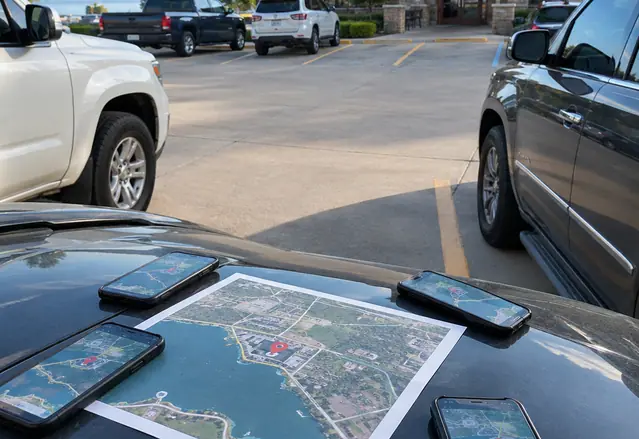
Nothing splits a caravan faster than three drivers trusting different map apps and two others scrolling back through Tuesday's text thread. Before anyone leaves Lake Texoma or their hotel, confirm the restaurant's exact street address and main entrance, then push that identical location to every driver while they are still parked.
Ask the restaurant staff where multiple vehicles should park, and bring up oversized vehicles or boat trailers explicitly rather than assuming a standard lot can swallow a rig fresh off the water. If several households are leaving the same reunion cabin or state park picnic area, consolidating into fewer cars saves everyone a headache in the lot.
Set a Clear Check-In Protocol
Once the cars are parked, your group needs a staging area. Pick a staff-approved meeting point that stays completely clear of entrance doors, accessible parking spaces, access aisles, and active vehicle lanes. Nominate one person—the main organizer, never one representative per car—to walk inside and handle host check-in while the rest of the group gathers at the meeting spot.
3. Sort Out Seating and Food Needs Before Check-In
Walking up to the podium with a vague guess at your headcount puts the host team on the back foot immediately. Collect a firm count of adults and children from every household ahead of time, and ask guests to message the organizer privately about high chairs, mobility or access needs, and dietary concerns. Keeping those replies private respects everyone's comfort and keeps medical details out of the main group thread.
When you relay that summary to the restaurant, separate true access needs from general seating wishes. Tell the staff about wheelchair access, stroller space, or high chairs first; treat requests like keeping roughly twenty cousins at one single continuous table as secondary preferences. Always ask whether splitting the party across nearby tables would help get everyone seated faster.
Handle Allergies Directly: A non-seafood dish or a different cooking method does not establish allergy safety; ingredients, shared equipment, and preparation practices need direct discussion with restaurant staff.
If your crowd has mixed tastes, check the restaurant's current menu for both seafood and land-based plates before promising anyone a specific dish. And for any diner managing a fish or shellfish allergy, have them speak directly with the restaurant staff before ordering rather than playing telephone through the group organizer.
4. Match Seafood Orders to the People Sharing Them
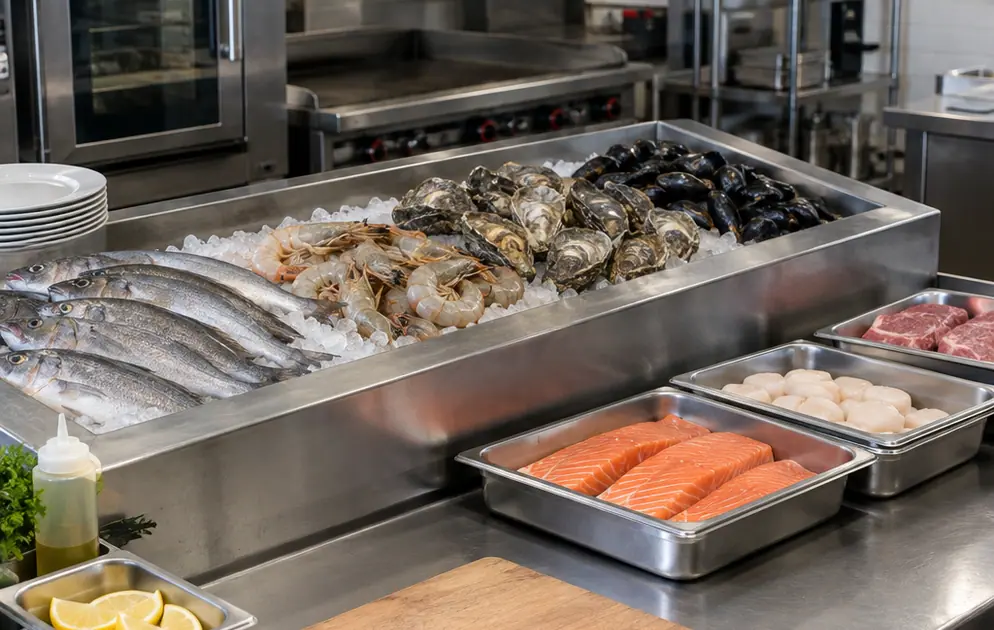
Texas road-trip food stops are famous for generous table spreads, yet ordering blindly for a crowd can stall the kitchen and complicate the bill. Instead of building your order around a presumed platter size, start with how your people actually like to eat. I break large parties into two ordering tracks before we even sit down:
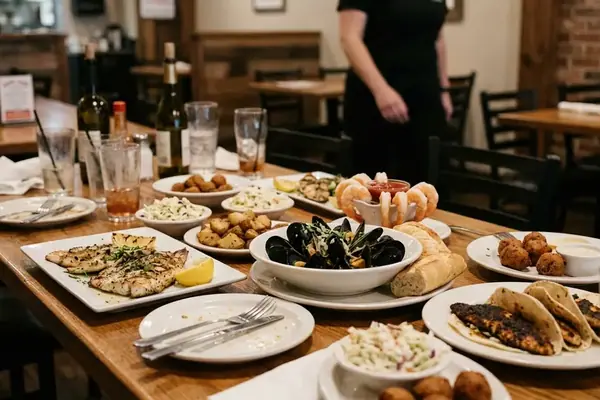
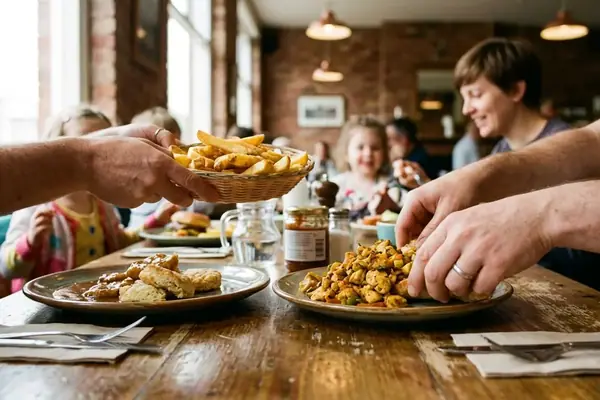
- The Shared-Platter Track: Relatives who agree on the same catfish and seafood dishes and how to divide them can team up to share. Before committing, ask your server whether shared platters are available on the current menu, what comes with them, and how the staff recommends matching an order to your sub-group's appetite.
- The Individual-Plate Track: Diners who want specific preparations, distinct Southern sides or comfort-food plates, or separate checks should order individual entrees. This keeps decision-making fast and prevents one picky eater from holding up four hungry relatives.
Use the wait time before seating to have every guest review the current menu and pick their main dish and sides. Before the server starts writing tickets, ask how the restaurant handles split checks for large parties, and decide right then who is paying for any shared platters or baskets of starters. Finally, ask your server how appetizers and main dishes can be paced for a big table so the kitchen can bring food out smoothly.
5. Send One Dinner Message Before the Cars Leave
Group chats buried under about forty thumbs-up reactions and side conversations cause missed turns and miscounted seats. Once you have spoken with the restaurant and sorted out the logistics, send one consolidated text message with the confirmed plan for the evening.
Copy-and-Send Group Dinner Text:
"Dinner: [confirmed restaurant name], [confirmed address]. Arrival window: [start time–end time, date]. Parking: [confirmed instructions]. Meet at [agreed meeting point]. [Organizer name] will check in; contact [phone number] if delayed. Payment plan: [agreed arrangement, including shared dishes]. Please confirm the adults and children in your household or vehicle group, counting each diner once, and tell me if plans change."
As the replies roll in, do not just forward individual texts to the host stand. Reconcile those responses yourself, watching closely for duplicate counts—a grandparent texting for the whole family and a driver texting for their SUV may be counting the exact same kids. Before the cars pull out, track down any missing replies and give the restaurant one clean, updated headcount.
The host stand needs a count of diners, not a count of replies: a grandparent and a driver may both be counting the same children.

Responses
Nothing here yet. Add your opinion.
Join the Discussion