
Quick Nav
- Why fried catfish fights the trip to the table
- Pick the picnic spot, then order the catfish
- Letting steam out of the catfish box
- Coleslaw, sauces and lemon wedges in the cooler
- Time and temperature on the drive
- Plates out before the lid comes off
- A Denison catfish picnic, packed start to finish
Why Fried Catfish Fights the Trip to the Picnic Table
A Southern fish fry has always been about timing. Catfish comes out of the oil golden and crackling, hushpuppies follow close behind, and everyone eats while the crust still shatters. The fish stays moist inside and the cornmeal coating stays crisp outside, and that contrast is the whole point of the plate.
Carry that same meal from a Denison pickup counter to a picnic table near Lake Texoma, and the contrast starts working against you.
Hot fish releases water vapor. Inside a closed takeout box, that vapor meets cooler packaging, turns back into droplets, and settles right onto the crust you paid for. Hushpuppies add their own steam. Coleslaw dressing, pickle juice and lemon can leak in from the side. Pack everything tight in one container and you end up with soft breading and a lukewarm lunch by the time the blanket is spread.
The fix comes down to four habits, and I treat all four as non-negotiable. Plan the pickup so it connects straight to eating. Let steam escape without leaving the fish uncovered. Keep wet, cold sides in their own chilled space. Watch the clock and the thermometer from the counter to the last bite. Venting and temperature pull in opposite directions, since every bit of steam that leaves takes heat with it, so each one needs its own attention.
Pick the Picnic Spot First, Then Call In the Catfish
Start at the table and work backward. Where will you actually sit down and eat? From there, trace the steps in reverse: setting out plates, walking from the parking area with your arms full, the drive, and finally the pickup. Pulling into a parking lot at Eisenhower State Park puts you near a picnic table, but you still have unloading and a walk ahead before anyone can eat.
For a lake day, confirm that your intended spot is open and that picnicking there fits current rules before you collect any hot food. Park access, facilities and hours change, and an official access notice or the posted park rules settle the question. Assume nothing from last summer's trip.
Then make the restaurant your last food stop. Ice, drinks, paper towels and the forgotten bag of chips all get handled before the catfish goes in the car. Once the fish is in hand, the only remaining move is driving to the table.
What to say when you place the order
Most counters can work with a clear request, but ask; don't assume a particular packing style. A short script covers it:
“Can the fish and hushpuppies be packed separately, with coleslaw, sauces, pickles, and lemon wedges in their own containers? Is vented packaging available?”
Think about portions and box space too. Two orders crammed under one tight lid will steam each other. Enough room for a single shallow layer does more for the crust than any trick you try later.
The kit that rides along
- A clean, shallow food container with a vented lid
- A clean food-safe rack, if you have one that fits
- A cooler with ice packs
- A food thermometer
- Plates, serving tongs or utensils, and napkins in a dry bag
- Hand-cleaning supplies
Planning is finished when the destination is confirmed, the route is settled, the kit is packed, and no shopping errands remain after pickup.
Letting Steam Out of the Catfish Box at the Counter
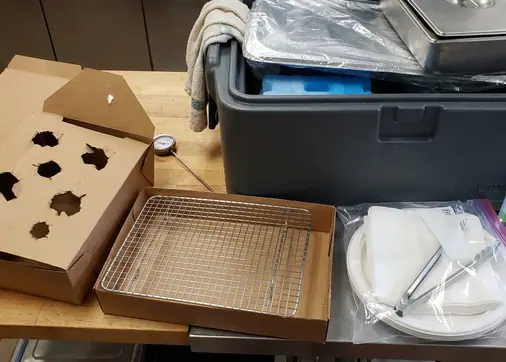
The first check happens before you leave the restaurant. Look at the box. Is there a vent? Are the pieces stacked on top of each other? Are droplets already beading under the lid, is the liner going dark and wet, or is liquid pooling beneath the fish? Each of those signs points to the spot where moisture is building up.
If something needs adjusting, do it while you're standing still, in a clean and sheltered place. The parking lot with the wind kicking up dust is a poor choice. Keep it brief and deliberate, and keep the fish covered against insects and grit while you work.
Here's the arrangement that protects the crust best. Lay the catfish in a shallow layer with a little space between pieces where the box allows. Set a clean food-safe rack under the fish so the bottom crust sits above any oil or moisture that collects. A rack lifts the fish out of the puddle, though it can't pull steam out of a sealed box; the vent handles that part.
If you use a paper liner, keep it under the fish. Wrapping each piece tightly in paper holds moisture against the coating. When a liner gets saturated, swap in a clean one if you can.
Foil deserves a special mention. Tightly wrapped foil feels like the responsible move for keeping food hot, and it traps vapor right against the crust while pressing on it. A fully sealed plastic clamshell does much the same with humid air. A shallow vented container lets steam out and keeps pieces from stacking, which is what you want for a short trip.
Hushpuppies get their own lightly vented container with enough room that nothing crushes them. Burying them under catfish is the quickest way to turn them gummy.
Crust Already Soft? Move Fast
Venting preserves a crust that's still crisp. It won't revive breading that's already wet or flattened. If the fish comes out of the box soggy, skip the fussing and shorten the gap between counter and table.
Coleslaw, Sauces and Lemon Wedges Ride in the Cooler
Coleslaw is the crust's worst enemy and the cooler's most important passenger. Pack it, along with any other perishable cold sides, in closed, leak-resistant containers and nest them among ice packs. The target is 40°F or below, and a cooler thermometer tells you whether you're there. Unmelted ice on top doesn't prove the bottom of the cooler is cold enough.
Sauces follow their labels. Tartar or other sauces that call for refrigeration travel with the coleslaw. Pickles and lemon wedges stay sealed until serving so their juice never reaches a fried surface.
Keep the cooler and the hot food physically apart. Setting the catfish box inside the cooler, even briefly, warms the cold sides and wraps the fish in damp, enclosed air, so both foods lose. Condensation dripping off a cold tub onto a hot box does similar damage on a smaller scale.
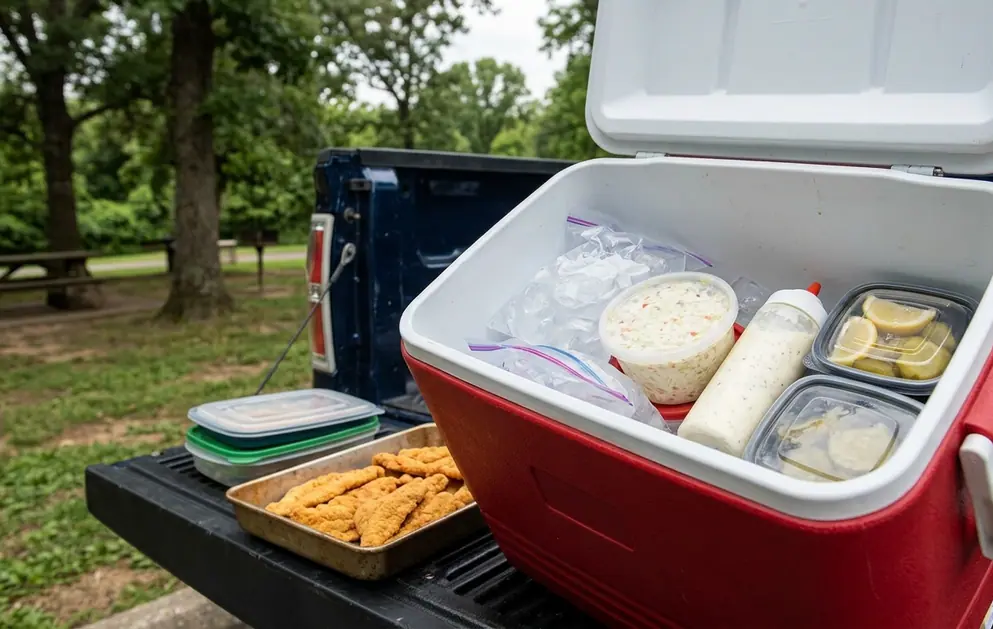
Short hop or long wait: two setups
Direct trip. Pickup is your last stop and the table is ready. A cold cooler rides beside a supported, vented fish container, and you serve when you arrive. This is the setup most Denison picnics call for.
Longer interval before eating. Maybe the group is still on the water or the meal time is uncertain. Now the fish needs actual temperature-controlled hot holding, kept separate from cold storage. More time in an ordinary takeout box won't cover a delay.
Plates, napkins and dry utensils go in a separate bag outside the cooler, away from meltwater and leaks. Damp paper plates are a small thing that ruins a good piece of catfish.
Time and Temperature on the Drive Out of Town
The fish container belongs in the air-conditioned passenger compartment, sitting level and supported, out of direct sun, with nothing heavy that could slide onto it. A floorboard with a folded towel underneath works well. Secure the cooler separately so a hard stop doesn't send it into the hot food.
Then be honest about what your packaging can do. A takeout box or insulated bag slows heat loss, and that's all. Verified hot holding means keeping food at or above 140°F with suitable equipment and checking it with a food thermometer. Retained warmth from a box doesn't count as holding, and a crisp-looking crust or a warm car cabin tells you nothing about the fish's temperature. Measure the food itself.
The window you're working inside
Food outside controlled hot or cold holding has a two-hour limit. When the air around it tops 90°F, which describes plenty of North Texas afternoons, that drops to one hour. Treat these as discard deadlines; they are not waiting times to use up.
The clock covers everything together: waiting at pickup, driving, unloading, walking, setting up, and time on the table. Starting a timer at pickup also leaves out whatever happened before the box reached your hands, so ask how the food was held before handoff. That question is the one place where these public-health time limits need adjusting for your situation, because a box that sat on a warming shelf versus a counter changes how much of the window is left.
Venting and the clock work as a pair. Since venting lets heat escape along with steam, a vented box is built for a direct drive and prompt serving. If an errand creeps in or the meal time goes vague, change the plan: move the stop before pickup, push the pickup later, or arrange controlled holding. Food past its limit gets thrown out. Reheating won't reliably undo the problems that develop during improper holding.
Watch the Lake-Day Heat
On a 90°F-plus day, set a phone timer for one hour the moment the bag is in your hands, and plan the drive and setup to finish well inside it.
Plates Out Before the Lid Comes Off
Arrival is where good packing pays off or gets wasted. Pick a shaded spot if one is available. Wash hands with soap and clean running water for at least 20 seconds; if there's no water, hand sanitizer with at least 60% alcohol is the fallback, though it struggles on greasy or visibly dirty hands. Then set out plates, tongs and napkins. Only after all that does the catfish box open.
Bring out the fish and hushpuppies when everyone is actually ready to eat. Keep them in shallow layers on a platter or right in the vented tray. A deep serving bowl looks generous and stacks wet pieces against crisp ones, which undoes everything you protected on the drive.
Coleslaw goes in its own dish or a separate plate compartment. Sauce gets spooned beside the fish so each person decides how much crust to cover. Squeeze lemon right before a bite. Lemon sitting in the transport tray is how the bottom pieces go limp.
Keep the cooler closed between helpings and put the coleslaw back in promptly so it stays at 40°F or below. Leftovers go into the cooler or a refrigerator within the time limit that still applies. Returning food to cold storage doesn't reset the time it already spent out. If the clock has run out, toss it, however crunchy that last piece still looks.
A Denison Catfish Picnic, Packed From Counter to First Bite
Worked example. This is a reader scenario for illustration: takeout catfish, hushpuppies, coleslaw, a few sauce cups and lemon wedges, headed for a Grayson County picnic table. It describes no particular restaurant's packaging.
The night before
The group picks a lakeside picnic area and checks the official access notice to confirm it's open for picnicking. Ice packs go in the freezer. The kit gets assembled: shallow vented container, a small rack, cooler, thermometer, and a dry bag with plates, tongs, napkins and sanitizer. Drinks and snacks get bought that evening so nothing is left for after pickup.
At the counter
The order uses the script above. At handoff, the catfish comes out in a supported, vented container with the pieces in one layer on the rack. Hushpuppies sit in their own lightly vented carton. Coleslaw, lemon wedges and the sauce cups that need refrigeration go straight into the iced cooler, and a quick look at the cooler thermometer confirms it reads 40°F or below.
The car now holds four separate zones:
- Vented fish container, level on the passenger floor
- Hushpuppy carton beside it, nothing on top
- Cooler with chilled sides and sauces, strapped in separately
- Dry bag of plates and utensils, away from the cooler
Drive, table, first bite
The drive goes straight to the picnic area. At the table, hands get cleaned and plates come out first. The fish container opens last, with pieces staying in their shallow layer. Coleslaw goes into its own dish, and sauce and lemon land on individual portions. The cooler lid shuts between helpings.
Halfway through the drive, someone suggests a detour for ice cream before eating. That detour doesn't buy extra safe time. It means changing the schedule or the holding method, and in this scenario the ice cream waits until after lunch.
Pickup-to-picnic packing check
- Destination access and picnic arrangements confirmed before ordering
- All errands finished; pickup is the final food stop
- Fish in a shallow, supported, vented container, liner beneath and not wrapped
- Hushpuppies in their own lightly vented carton, uncrushed
- Coleslaw, refrigerated sauces, pickles and lemon sealed in the cooler at 40°F or below
- Dry plates and utensils bagged apart from the cooler
- Fish container level in the air-conditioned cabin, out of the sun
- Timer running: two hours, or one hour above 90°F
- Hands clean and plates out before the fish container opens
Four Zones, One Clock
Vented fish, separate hushpuppies, chilled sides and dry supplies each get their own space, and every minute from the counter to the last bite counts toward the same limit.
So for your next lake day: is your picnic table close enough to make the catfish your very last stop, or does the plan need to change before you place the order?
Responses
Nothing here yet. Add your opinion.
Join the Discussion