
A well-executed blackened catfish fillet offers a far better introduction to the fish’s own flavor than a thick fried coating. In Denison & Grayson County, where the classic golden fish fry is a deeply loved benchmark after a long day out on Lake Texoma or at Eisenhower State Park, stepping away from the fryer might feel like breaking a local rule. Yet when we evaluate the plate purely through taste and texture, removing that heavy starch barrier lets more of the fish’s flavor through. My preference here rests entirely on sensory grounds rather than any nutritional scorekeeping or rigid ranking. The spice crust, the moisture of the interior, and the preparation details you can check before ordering explain why a directly seasoned fillet deserves your attention first.
A Spice Crust Lets the Catfish Stay in the Conversation
Consider the physical architecture of a single bite. When seasoning is pressed directly onto the raw surface of a catfish fillet, thermal energy acts immediately on the aromatics and the outer protein layer without an intervening starch jacket. That direct contact creates a savory, integrated surface while keeping the mild, sweet character of the fish at the center of the experience.
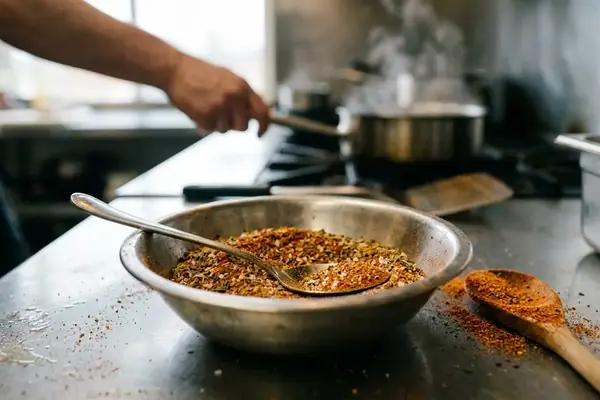
A kitchen's dry rub usually relies on a balance of specific flavor compounds.
- Paprika: Contributes an earthy, sweet pepper foundation that darkens rapidly under conductive heat and builds visual depth.
- Ground Peppers: Black, white, or cayenne peppers deliver sharp, volatile pungency that wakes up the palate without masking the delicate meat beneath.
- Dried Herbs: Thyme or oregano introduce high-note aromatic contrast that cuts through the richness of the cooking fat.
These are common ingredients in blackening seasoning rather than a confirmed local recipe, and the exact blend determines the flavor. What reaches your fork is a browned, tightly adhered spice crust. Fried breading earns every bit of its reputation for delivering an audible, shattering crunch, and that mechanical contrast is a legitimate culinary pleasure. However, a thinner, directly seasoned surface keeps the catfish itself prominent in the conversation. There is a structural limit to this approach: an overly aggressive hand with the spice dredge can bury the fish's mild flavor just as easily as heavy batter. Balance on the prep table matters more than the mere word "blackened" on a menu board.
Blackened, Grilled, and Burned Are Different Things
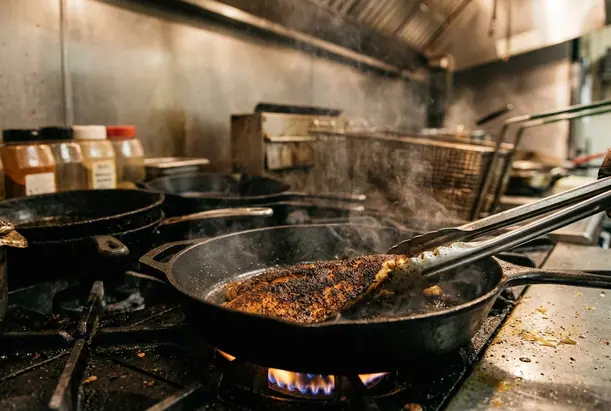
Diners frequently treat blackening, grilling, and charring as interchangeable terms, which leads to disappointment at the table. True blackening is a distinct preparation defined by direct seasoning and high-heat cooking, classically executed in a blazing hot skillet with cooking fat. When the seasoned fillet hits that lubricated metal surface, the milk solids or lipid compounds in the fat interact with the spices and surface proteins, driving rapid Maillard browning and caramelization.
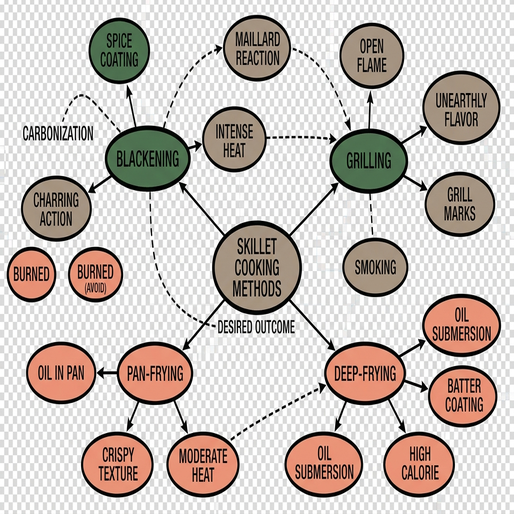
Grilling, by contrast, is a cooking method where heat radiates from below through open grates. A kitchen can certainly dust a fillet with blackening seasoning and lay it across a grill, but a few dark grate marks on bare fish do not establish a true blackened crust. Even more important is separating desirable browning from thermal ruin.
The goal of high-heat skillet work is a tight sensory contrast: a dark, deeply aromatic exterior giving way immediately to a moist interior that separates into tender, intact flakes. If the crust tastes acrid or sharply bitter, or if the center of the fillet has been driven to a dry, cottony state, the kitchen pushed the heat past the point of pyrolysis. Diners should never accept a burned, bitter exterior as an inherent feature of the style. The menu label "blackened" says nothing about the actual Scoville heat level, the volume of added cooking fat, the portion size, or the accompaniments, so it never automatically implies a lighter or nutritionally superior plate.
Fried Catfish Wins on Crunch—and Still Has Competition
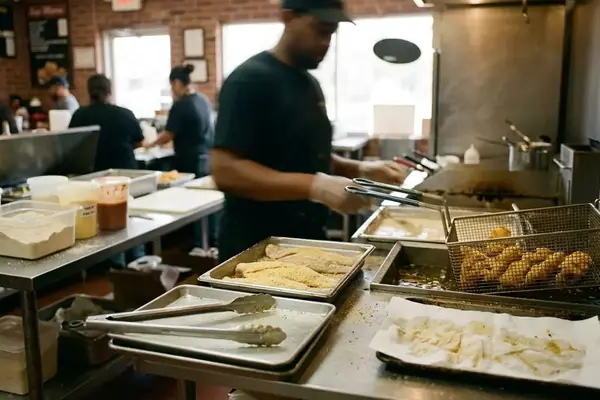
To make a fair judgment, we have to compare a great blackened fillet against a genuinely competent fish fry. When a kitchen runs a clean fryer with tight temperature recovery, a thin, properly executed cornmeal or flour coating is a marvel of culinary engineering. Water vapor escaping the muscle fibers pushes outward against the hot oil, setting a porous, crisp lattice while steaming the interior gently in its own moisture. Where kitchen execution holds steady, a delicate fried crust preserves a juicy center and still lets the clean flavor of the catfish come through.
Tradition makes that golden basket the default choice at most Texas road-trip food stops, and the familiar comfort of that crunch is undeniable. Yet habit shouldn't make fried fish the automatic order every time you sit down. The difference is in the directly seasoned surface, the moist flakes beneath it, and the separate crunch that belongs exclusively to fried breading. Choose blackened when the flavor of the fish itself and complex surface browning are your top priorities; order fried when that mechanical, starchy crust is the exact pleasure you came through the door to find.
Give the Spice Crust Room on the Plate
Once a well-seared fillet lands on the table, the surrounding sides play a major role in how your palate perceives the spice work. Heavy, starch-laden accompaniments can fatigue your taste buds and crowd the plate. Consider an order built around thermal and textural contrast.
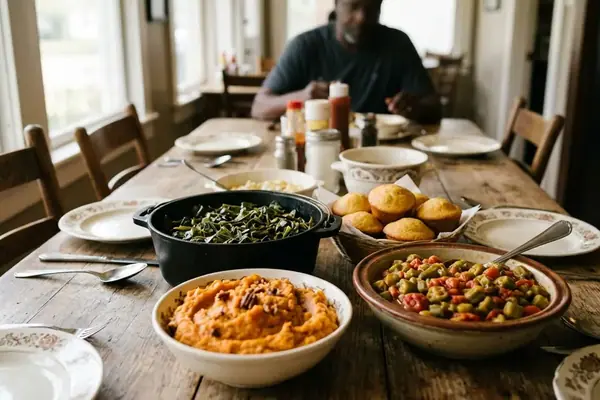
Pairing the hot, spiced fillet with a cool, crisp slaw and a simply prepared green vegetable side—if the kitchen offers them—gives your palate a clean reset between bites. Neither side is guaranteed on every local menu, so look for similar contrasts when scanning your options. When the plate arrives, follow a deliberate tasting sequence:
- Take the first bite completely plain: Taste the seasoned surface and the moist flake together to evaluate the kitchen's baseline salt, heat, and sear.
- Add acid second: Squeeze a small amount of fresh lemon juice over a section of the fillet if you want to brighten the earthy spices.
- Use rich sauces sparingly: Dip a forkful into tartar or remoulade on the side rather than blanketing the fish.
Smothering a blackened fillet immediately with a heavy, mayonnaise-based sauce introduces a dominant lipid and acid layer that masks the subtle aromatics of the crust. Because spice blends vary wildly from mild herbal rubs to cayenne-heavy dredges, don't treat the menu description as a heat rating. Ask your server directly: "How hot is the blackening seasoning?"
Ask How the Catfish Is Cooked Before You Order
Imagine pulling into Denison with an appetite after an afternoon on the water, ready to settle in for a relaxed meal at Huck’s Catfish. A preference for a blackened fillet doesn't mean it's on the menu. Blackened or grilled catfish availability at Huck’s Catfish has not been confirmed here, and kitchen lineups and daily offerings can shift.
Before You Order: Check the current menu board and speak directly with the staff rather than assuming a specific high-heat preparation is on the line.
Establish availability first, and then clarify the cooking method so you know what will arrive from the kitchen. When your server steps up to the table, ask: "Do you offer blackened catfish, and is it cooked in a skillet or on the grill?" If the answer is no, ask about the alternative without treating the two styles as identical: "Is grilled catfish available?"




Responses
Nothing here yet. Add your opinion.
Join the Discussion