
Quick Nav
- Which cut fits your plate?
- How the three cuts differ
- The case for fillets
- How to eat catfish steaks
- Working through a whole fish
- A plate-by-plate comparison
- Three questions before ordering
Which Catfish Cut Fits Your Plate?
Should you order a boneless fillet, a bone-in steak, or a whole-fried catfish?
Start with bone tolerance. That single decision eliminates unsuitable formats faster than a debate over crust, size, or presentation. A diner who wants unrestricted forkfuls will usually be happiest with a fillet. Someone comfortable working around one visible central bone can consider a steak. A whole-fried fish suits the diner willing to separate two sides of meat from a continuous backbone while watching the rib and fin areas.
After that, consider texture, appetite, and pace. Fillets make an easy road-trip lunch. Steaks offer a compact, substantial cross-cut. Whole fish turn dinner into a slower, more deliberate experience centered on the fish itself.
This comparison covers those three plate formats without assuming that every stop in Denison & Grayson County dining serves all of them. Menus may list only one or two, and cut names can vary. The written description and the server’s explanation carry more weight than a short menu label.
Choose Bones First
Set the acceptable bone level before comparing breading or southern sides & comfort plates. A crisp presentation loses its appeal quickly when the diner expected boneless bites.
How the Knife Creates Three Catfish Orders
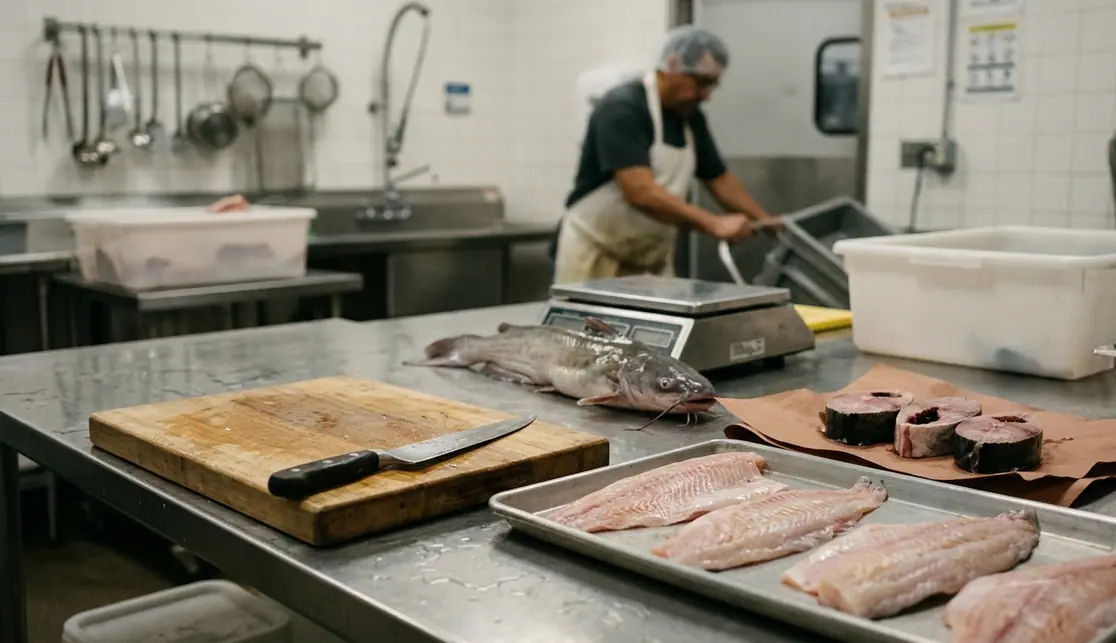
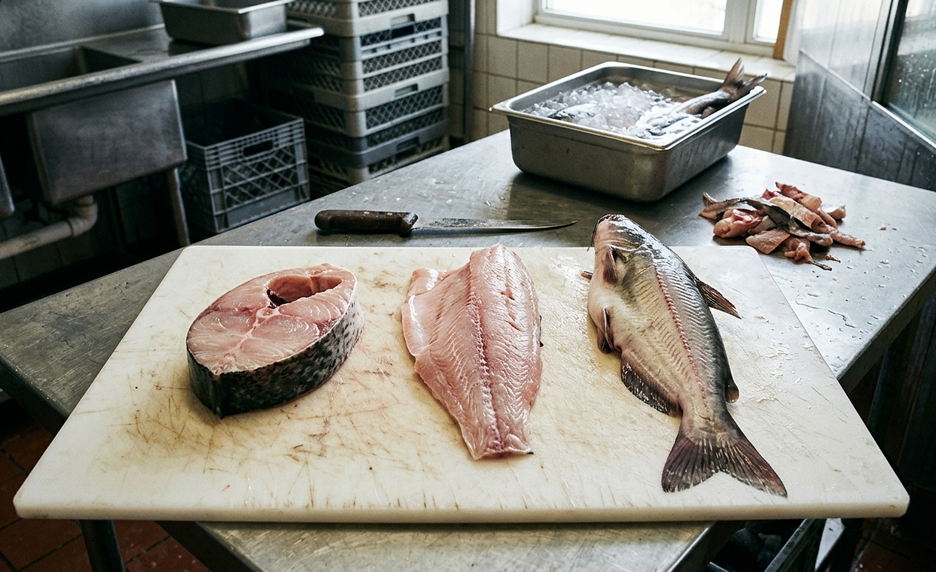
The direction of the cut determines where the backbone lands on the plate. A fillet comes away lengthwise from one side of the fish. A steak is sliced crosswise through the body. A whole preparation keeps most of the cleaned fish intact rather than dividing it into separate portions.
A catfish yields two main side fillets, one from each side of the backbone. Removing those fillets takes away the main skeletal structure and leaves broad pieces that taper toward the tail. Small bones can occasionally remain after trimming, so even a menu description of “boneless” warrants a deliberate first few bites.
Every cross-cut steak includes a section of backbone near its center. Its outline may look oval or horseshoe-shaped, depending on the fish and where the cut passes through the belly cavity. Skin can form the outside rim when the kitchen leaves it attached.
A whole-fried order retains the continuous backbone from the shoulder area toward the tail, along with rib, fin-area, and smaller bones. “Whole” does not settle every presentation detail: the fish may arrive head-on or head-off, and the skin may be scored. Those points are worth confirming when the order is placed.
Fillets Keep the Meal Easy and Flexible
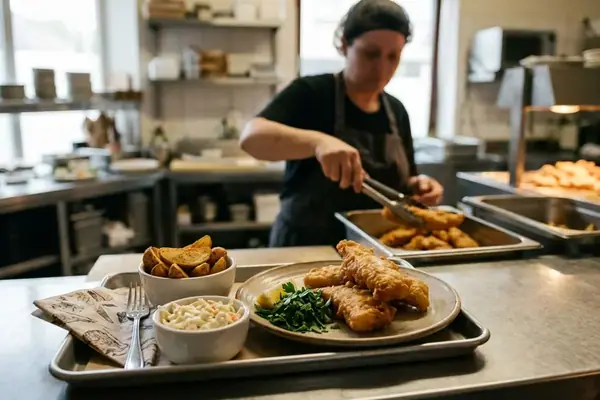
Choose a fillet when convenience governs the meal. With the main frame already removed, the fish can be divided into fork-sized pieces, picked up in crisp sections, or tucked into a sandwich without repeatedly turning it to find a backbone.
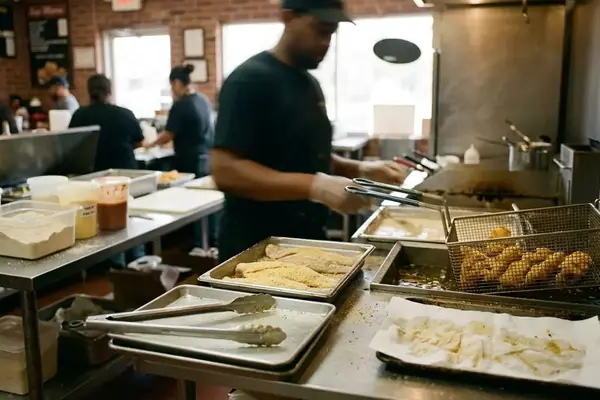
The shape also affects the fried result. Broad faces and a long perimeter expose plenty of surface to seasoning or breading relative to the tender interior. That geometry supports the familiar contrast people seek in catfish & seafood classics: a well-seasoned exterior followed by moist flakes.
One fillet can still provide more than one texture. The shoulder or upper-body end carries thicker meat and tends to produce a more substantial forkful. The narrowing tail end cooks as a thinner piece, creating smaller bites with more crisp edge. Diners sometimes interpret that variation as inconsistency even though it follows the natural shape of the fish.
For visit planning around Lake Texoma & Eisenhower State Park, the fillet is particularly practical. It asks for less plate-side attention, making it well suited to families, quick lunches, and Texas road-trip food stops where the next destination still matters.
Catfish Steaks Put a Thick Cross-Cut Around One Bone
A catfish steak is a crosswise body slice with a visible backbone section near the middle. When the skin remains attached, it commonly forms a rim around the outside. The compact shape can deliver a deeper bite than the tapered end of a fillet, though cooking control and cut thickness still govern the final texture.
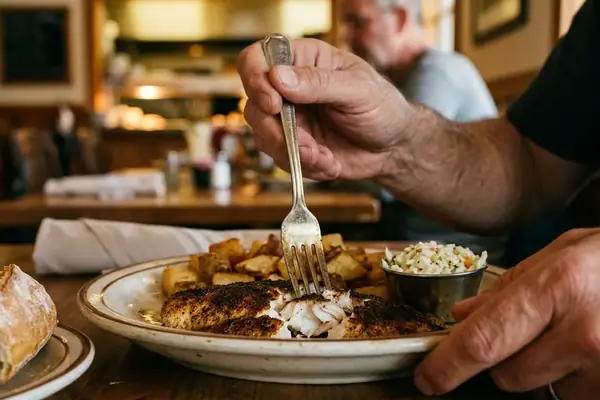
Approach the steak as two accessible portions divided by one central structure. Use the fork to loosen meat from the first side, following the bone rather than pressing through it. Then turn or reposition the slice and clear the second side. This method keeps the backbone visible and reduces unnecessary searching through the meat.
Steaks occupy a useful middle ground. They preserve a recognizable bone-in character while demanding less navigation than a whole fish. They suit diners who enjoy a substantial cut and feel comfortable seeing exactly where the principal bone sits.
Work Side to Side
Clear one side of the steak before rotating it. Cutting straight through the center only drives the utensil into the backbone.
Whole-Fried Catfish Rewards a Slower Approach
A whole-fried catfish arrives cleaned but retains its recognizable shape, continuous backbone, and smaller bones. It offers the fullest view of how shape and thickness influence a serving: the shoulder carries more meat, while the body narrows toward the tail.
That progression creates distinct eating zones. Crisp exterior areas may be especially noticeable along thinner edges and scored skin, while thicker shoulder meat provides larger flakes. Breading load, fryer control, and the time between cooking and serving can shift that balance, so the cut alone cannot promise a particular degree of crunch.
Before taking the first bite, identify whether the fish is head-on or head-off and look for scoring in the skin. Begin on the upper side. Open the exterior gently, then lift the top-side meat from the backbone in small sections. Once the first side is clear, turn the fish or lift the exposed backbone to reach the second side.
Extra attention belongs around the ribs and fin areas. Randomly breaking the fish apart makes those smaller bones harder to track; following its structure keeps the meal orderly.
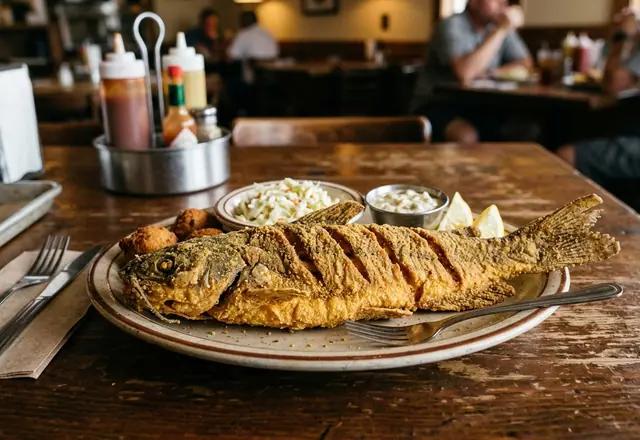
This format works best for an unhurried seafood meal. It places crisp edges, thicker flakes, and traditional bone-in presentation on one plate, with the fish rather than the side dishes setting the pace.
Compare Bone Level, Shape, and Eating Effort
The clearest comparison uses two passes. First, select an acceptable bone level: minimal navigation, one central backbone section, or the full skeletal structure. Then decide whether the preferred experience is easy pieces, a thick cross-cut, or meat lifted from an intact fish.
| Plate factor | Fillet | Steak | Whole-fried fish |
|---|---|---|---|
| Bone level | Main bones removed; an occasional small remnant may remain | One prominent backbone section, with possible smaller bones | Full backbone with rib, fin-area, and smaller bones |
| Typical shape | Broad side cut that narrows toward the tail | Compact oval or horseshoe-like cross-cut | Recognizable cleaned fish shape |
| Texture variation | Thicker shoulder end and thinner tail end | Relatively deep bite around the center | Thicker shoulder meat with narrowing tail sections |
| Ease of eating | Highest; divide directly into bites | Moderate; clear two sides around the center bone | Most involved; follow the backbone and watch smaller bones |
| Ideal diner | Values convenience and minimal bone handling | Wants a substantial bone-in cross-cut | Enjoys crisp edges and a traditional presentation |
Fillets provide maximum convenience. Steaks concentrate the meat around one obvious central bone. Whole fish offer the widest range of plate textures and the most hands-on experience.
Texture still depends on kitchen choices. Thickness, seasoning, breading, frying time, fryer control, and holding time can all change how crisp or tender a serving feels. When several cuts are available, a group can order different formats and compare them under the same kitchen conditions during one meal.
Ask Three Questions Before Ordering in North Texas
Three direct questions resolve most uncertainty before the ticket reaches the kitchen:
- “Is it boneless?” Ask this even when the item appears to be a fillet, since menu terminology is not perfectly standardized.
- “Does the whole fish arrive head-on or head-off?” The word “whole” leaves that presentation choice unanswered.
- “Which cut has the crispest exterior today?” This brings current preparation and holding time into the decision instead of relying on cut shape alone.
For a road-trip lunch, the fillet keeps each bite straightforward and leaves attention free for the rest of the day. A diner comfortable navigating one central bone can move to the thicker steak. An unhurried meal built around the fish itself favors the whole-fried preparation.
Make the final choice by bone tolerance first and cooking preference second. Appetite and available southern sides & comfort plates can then settle the portion. That sequence keeps the plate aligned with the way the diner actually wants to eat.
Order Before Guessing
Ask all three questions before the order is sent. A server’s answer can guide the cut at that point; after the plate arrives, it merely explains the choice already made.
The defining plate-level fact is visible in the center: every crosswise catfish steak contains one section of backbone created by the cut through the body.




Responses
Nothing here yet. Add your opinion.
Join the Discussion